The Standard-Setter: How Aaron Kwok's Behind-the-Scenes Demands Are Quietly Becoming the Industry Playbook
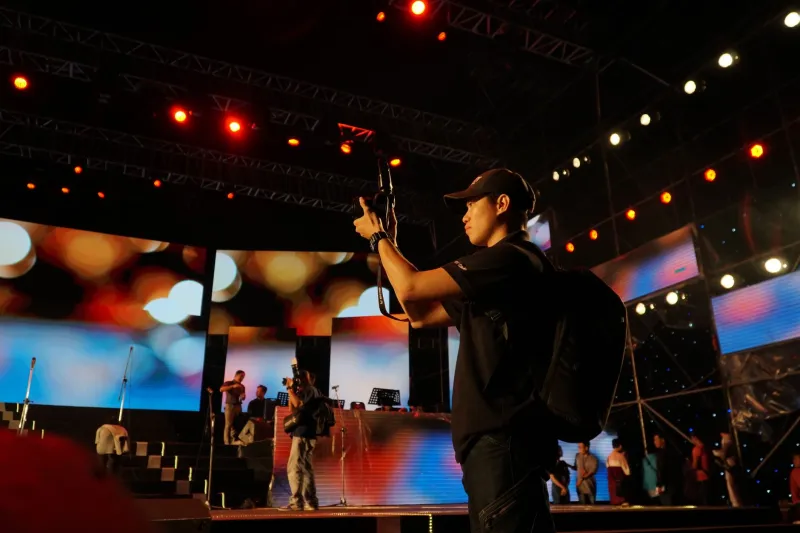
There's a phrase that's started circulating among production crews who've worked high-profile concert tours across the US: "Kwok-level." It's used as a shorthand for a particular grade of preparation — obsessive, detail-oriented, non-negotiable. And if you ask the people who spend their working lives behind the curtain, it's the clearest compliment they know how to give.
Aaron Kwok has always been the kind of entertainer whose name carries weight the moment it's spoken in a room. But increasingly, that weight isn't just about ticket sales or streaming numbers. It's about what happens in the weeks and hours before a single fan walks through a venue door. It's about the conversations that take place in loading docks, mixing booths, and production offices — conversations that, more and more, are being shaped by the expectations Kwok has spent decades building into everything he touches.
What "Ready" Actually Means
For most touring acts, venue readiness is a checklist. For Kwok's production team, it's a philosophy.
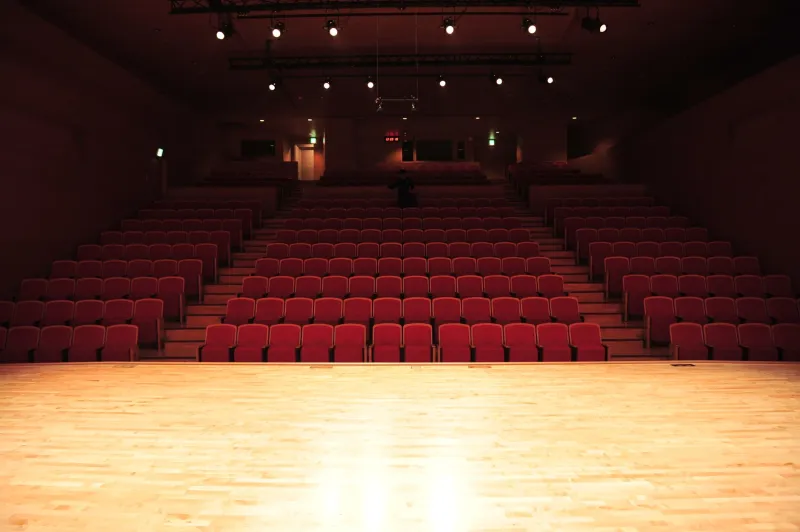
Production managers who've worked his US dates describe an intake process that begins well before any equipment truck rolls in. Venue schematics are studied in detail. Sightline reports are requested and reviewed. Acoustic mapping — still considered optional by many touring productions — is treated as mandatory. One venue operations director at a major mid-Atlantic arena put it plainly: "Most tours send a rider and a tech spec. Aaron's team sends questions. Lots of questions. And they actually want answers, not just confirmations."
That level of pre-production rigor has a ripple effect. Venues that host Kwok's shows often find themselves upgrading documentation, tightening internal communication protocols, and revisiting assumptions they'd held for years. Not because they were told to — but because working at that level makes the old way feel inadequate.
Sound as a Non-Negotiable
Ask any audio engineer who's mixed a Kwok production and you'll hear the same word repeated: intentional. Every element of the sonic experience — from the sub-bass frequencies that hit you in the chest to the vocal clarity in the upper-tier seats — is considered, tested, and refined before showtime.
A front-of-house engineer based out of Nashville who has worked multiple Kwok US dates described a rehearsal process unlike anything else in his career. "We did full-volume run-throughs at 11 in the morning just to assess how the room was behaving. We adjusted. We ran it again. And then we adjusted again. By showtime, there were no surprises — and in live audio, that's almost unheard of."
That commitment to sonic precision has started influencing how other touring acts approach their own sound prep. Engineers who've worked Kwok shows now bring those habits to other clients — higher standards for line checks, more rigorous room analysis, a refusal to accept "good enough" when "great" is achievable. The knowledge transfers. The bar moves.
Crew Culture and the Professionalism Question
One of the less-discussed dimensions of Kwok's production philosophy is how he treats the people who build and run his shows. In an industry where crew members are often treated as interchangeable labor, Kwok's teams report something different: a culture of mutual respect that flows directly from the top.
A lighting director who's toured with several major international acts described the contrast clearly. "On some tours, the crew is basically invisible. You do your job, stay out of the way, and move on. With Aaron's production, you're part of the conversation. Your expertise matters. If you flag a problem, it gets heard."
That approach has practical consequences beyond morale. Crews that feel respected communicate more openly. Problems get surfaced earlier. Solutions get implemented faster. The whole machine runs better — and the show benefits directly.
Venue operators who've hosted multiple Kwok dates note that his crew consistently leaves facilities in better condition than they found them. It sounds like a small thing. In practice, it's a signal about how an entire production is managed — and it doesn't go unnoticed.
Creative Integrity as an Operational Principle
Perhaps the most distinctive aspect of the Kwok production standard is the way creative integrity functions not as an artistic preference but as an operational discipline. The vision for a show isn't just handed down from above and executed by technicians. It's shared, understood, and owned across the entire production team.
A production designer who worked on Kwok's most recent US run described the briefing process as unusually thorough. "We weren't just given specs. We were given context — why this moment needed to feel this way, what the audience was supposed to experience emotionally at this point in the show. That context changes how you make decisions when something goes sideways at 9 PM and you need to adapt fast."
That shared understanding of creative intent is something production veterans say is rare and valuable. It reduces the friction between artistic vision and technical execution. And increasingly, it's something other major acts are trying to replicate — not always successfully, but the attempt itself signals how influential the model has become.
The Downstream Effect
What makes the Kwok effect genuinely significant — beyond the individual shows — is how it compounds across an industry.
Sound engineers carry their habits from one tour to the next. Venue operators update their protocols and apply them to every act that follows. Production designers bring their frameworks to new projects. The standards don't stay contained within a single production. They spread.
Several US venue operators interviewed for this piece said that hosting a Kwok production had directly influenced how they approached relationships with other touring acts. One operations manager at a West Coast amphitheater was direct about it: "After working with his team, we started asking different questions of every act that came through. We raised our own expectations for what a professional production relationship should look like."
That's not a small thing. That's an entertainer's standards becoming infrastructure — quietly embedded in how the American live entertainment industry operates at its best.
Why It Matters for Fans
For anyone who's attended an Aaron Kwok show in the US, the effect is felt even if the mechanics behind it are invisible. The sound is cleaner than you expected. The lighting hits differently. The show starts on time and runs with a precision that feels effortless — which is exactly how the best-executed productions are supposed to feel.
What fans experience as a great night out is actually the visible surface of hundreds of decisions made by people who were held to an unusual standard and rose to meet it. That's the Kwok effect in its most direct form: excellence that radiates outward, shapes the people around it, and makes everything better for everyone in the room.
And in an industry that doesn't always reward the unglamorous work of preparation and professionalism, that might be Aaron Kwok's most underrated legacy of all.