Built for the Show: How Aaron Kwok's Production Vision Is Physically Transforming America's Concert Venues
When Aaron Kwok's production team walks into a venue, the conversation rarely starts with ticket counts or backstage catering. It starts with rigging grids, sightline angles, and LED pixel pitch. Across the US, major concert halls are discovering that hosting Aaron Kwok isn't just a booking — it's a renovation.
And honestly? Most of them are saying thank you afterward.
The Rider That Rewired the Room
Technical riders — those dense, multi-page documents that outline an artist's production requirements — are standard practice in the live entertainment industry. Every major act has one. But people who've worked with Aaron Kwok's team describe his documentation as something closer to an architectural brief.
Sources familiar with the negotiations around his recent US dates say the specifications go well beyond the usual lighting rigs and stage dimensions. His team arrives with detailed schematics: exact load-bearing requirements for elevated stage extensions, preferred truss configurations for his signature overhead lighting arrays, and — perhaps most unusually — precise floor surface specifications designed around his choreography.
That last point matters more than it might sound. Aaron Kwok's dance sequences aren't just visually demanding; they're physically precise. The friction coefficient of a stage floor directly affects how safely and accurately his movement vocabulary can be executed at full performance intensity. When a venue floor doesn't meet the spec, his team doesn't quietly adapt. They resurface it.
"It's not diva behavior," one production coordinator told us. "It's engineering. He knows exactly what he needs to do the show he's committed to doing, and he won't compromise the performance to accommodate a venue that wasn't built with that level of artistry in mind."
Sightlines, Scale, and the Audience Experience
Beyond the technical specs, there's a philosophy driving these demands that has less to do with Aaron Kwok's comfort and more to do with the audience's experience.
His production design is built on a concept that his creative team refers to internally as "total immersion" — the idea that every person in the room, from front-row floor seats to the upper-deck nosebleeds, should feel like they're having the same show. That's a genuinely difficult problem to solve in American arenas, many of which were designed primarily for sports, not spectacle.
To close that gap, Aaron Kwok's team has pushed venues to reconsider how they deploy video infrastructure. At several US locations, this has meant installing additional LED panels at mid-hall heights — positions that weren't part of the venue's original design — specifically to ensure that rear sections receive the same visual density as the floor. In at least two cases, this required permanent mounting hardware that stayed in place after the show, because venue management recognized the upgrade had broader value.
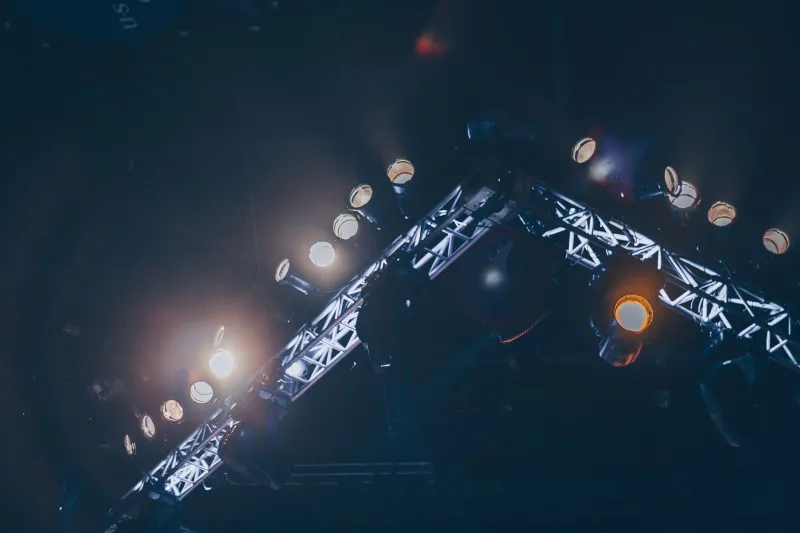
Lighting is the other major conversation. Aaron Kwok's shows use a layered lighting approach that requires far more fixture positions than a standard concert setup. Where most productions work with a front-of-house rig and some stage-level effects, his design calls for lateral positions, floor-level practicals embedded in the stage itself, and overhead configurations that demand a rigging grid with significantly higher load ratings than many older American venues carry.
Several halls have quietly upgraded their rigging infrastructure specifically in anticipation of — or directly following — a Kwok booking.
The Ripple Effect on Venue Standards
Here's where it gets interesting for the broader industry: when a venue upgrades for Aaron Kwok, every artist who performs there afterward inherits the improvement.
This isn't accidental. People close to his production operation say there's an awareness that the demands they make leave a legacy. A rigging grid rated for heavier loads. A stage floor with better performance characteristics. Mid-hall video positions that give every subsequent act more creative flexibility. In a real sense, Aaron Kwok's technical ambition is functioning as a capital improvement program for American live entertainment infrastructure.
Venue managers who've been through the process tend to describe a learning curve that's steep but ultimately valuable. The initial conversations can be tense — nobody loves being told their flagship hall doesn't meet a production spec. But the post-show assessments consistently land in the same place: the upgrades were worth it, the audience response was exceptional, and the facility is better positioned for future world-class bookings as a result.
"He basically future-proofed our stage," one venue operations director said of a recent engagement. "We'd been putting off some of those infrastructure investments for years. His team's requirements gave us the business case to finally pull the trigger."
What This Means for the Fan Experience
For fans buying tickets to an Aaron Kwok show at a US venue, all of this behind-the-scenes negotiation translates into something very tangible: a better night out.
The attention to sightlines means you're less likely to feel like the show is happening for someone else. The floor surface work means the dancing — and this is Aaron Kwok, so the dancing is the show — lands with the precision and impact it was designed for. The lighting infrastructure means the visual language of the production reads clearly from wherever you're sitting.
It also means that the venue you're walking into has likely been quietly upgraded in ways you'll feel without quite being able to name. The picture looks sharper. The lighting feels more dimensional. The stage seems to breathe differently than it did at the last show you caught there.
That's not magic. That's a production team that refused to accept the room as it was.
A New Benchmark for What "World-Class" Looks Like
The broader takeaway from all of this isn't just about Aaron Kwok. It's about what happens when an entertainer at the absolute peak of his craft refuses to let infrastructure limitations define the ceiling of his performance.
American venues have long set the global standard for live entertainment production. But standards only move when someone demands more. In city after city, Aaron Kwok's team is arriving with that demand — backed up by detailed specs, real engineering rationale, and a track record that makes venue managers willing to listen.
The stages they leave behind are measurably better than the ones they found. And the audiences who pack those rooms — for Aaron Kwok and for everyone who follows — are the ones who benefit most.
That's the Aaron Kwok effect, in its most literal form: a performer so committed to the quality of the live experience that his presence physically improves the spaces where live performance happens. Not a bad legacy to be building, show by show, city by city, across the American concert landscape.