No Filter, No Distance: The Fan Connection Model Aaron Kwok Built Before It Was Cool
Somewhere between the parasocial fantasy that social media sells and the cold, managed distance of old-school celebrity PR, there's a third thing. It's rarer, harder to manufacture, and — as it turns out — considerably more durable. Aaron Kwok has been living in that third space for a long time.
In an era when fan engagement has become a fully professionalized discipline, complete with analytics dashboards and content calendars and teams of people whose entire job is to make a celebrity seem approachable, Kwok's approach stands out precisely because it doesn't feel like an approach. It feels like a person.
What Genuine Looks Like at Scale
Here's the thing about authenticity in the celebrity context: it doesn't scale easily. Or at least, the manufactured version doesn't. You can train a team to post in someone's voice, to respond to fans with the right blend of warmth and wit, to create the impression of access. But fans — especially dedicated, long-term fans — are extraordinarily good at sensing when the signal is real and when it's noise.
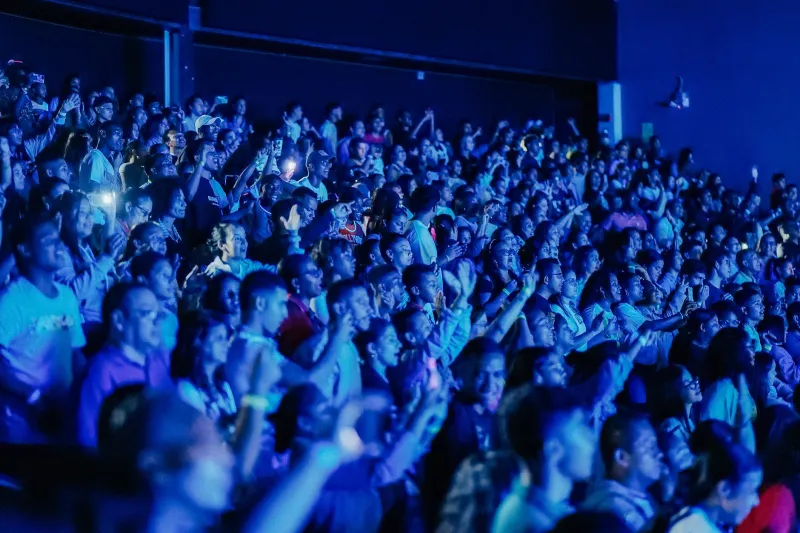
Kwok's fanbase has been around long enough to have developed serious calibration skills. Many of the people who follow him today were following him in the 1990s, and they've watched enough celebrities try and fail at authentic connection to know the difference. The fact that his community has maintained its intensity across decades isn't an accident. It's evidence of something real on the other end of the relationship.
What that looks like in practice varies — live event interactions, platform engagement, moments that get shared organically because they feel genuinely unscripted. But the throughline is consistency. Not consistency of posting schedule, but consistency of presence. There's a person there, and he shows up the same way whether the cameras are explicitly on or not.
The Algorithm Problem Nobody's Solving
American celebrity culture has spent the last decade trying to solve fan engagement through technology. Better targeting, smarter content distribution, platform-native formats — all of it designed to maximize reach and optimize engagement metrics. And some of it works, at least by the numbers.
But there's a growing body of evidence that algorithmic engagement and genuine loyalty aren't the same thing, and that optimizing for one can actually undermine the other. Fans who discover an artist through a viral moment and fans who've been in the community for twenty years relate to that artist in fundamentally different ways. The former are audience members. The latter are something closer to stakeholders.
Kwok's model has always prioritized the stakeholder relationship. That doesn't mean ignoring new audiences — his ability to keep finding new fans while retaining old ones is part of what makes his career so instructive. But it means that the core of the fanbase is built on something that doesn't disappear when the algorithm stops surfacing your content.
For American entertainers whose entire audience was assembled through platform mechanics, that's a genuine vulnerability. When the platform changes — and they always change — what's left?
In-Person as Infrastructure
One thing that often gets overlooked in conversations about fan connection is the role of live, in-person experience. Not just concerts, but the texture of interaction that surrounds them — the way an artist behaves backstage, how they treat the people in the room, whether they're present or just physically there.
Kwok's reputation in this space is consistent. The accounts that surface from fans who've had in-person encounters — at shows, at events, in the various contexts where the distance between performer and audience collapses temporarily — describe someone who is genuinely engaged. Not performing engagement. Actually paying attention.
In the US, we tend to underestimate how much this matters. We've built an entire celebrity infrastructure designed to manage and minimize direct contact, because direct contact is unpredictable and unpredictability is risky. But that management creates a kind of sterility that fans feel, even when they can't name it. The safest version of a celebrity is often the least compelling one.
What American Entertainers Keep Getting Wrong
The dominant model of fan engagement in American entertainment right now is essentially a broadcast model with a comments section. The celebrity publishes, the fans react, and the interaction is asymmetrical by design. Occasionally a celebrity will respond to a fan comment or repost something from the community, and this gets treated as a meaningful gesture.
Kwok's model challenges that framing at a pretty fundamental level. The relationship isn't broadcast-plus-comments. It's closer to an ongoing conversation with a community that has genuine stakes in the outcome. That community has watched him grow, has been there through the career pivots and the personal chapters, and has developed a kind of investment that goes well beyond liking a post.
Building that kind of community takes time and it takes honesty. You can't shortcut it with a well-timed emotional revelation or a candid photo series. The fans who've been around long enough to really matter have seen all those moves before.
The Loyalty Dividend
There's a practical argument here that's worth making explicitly: deep fan loyalty is a business asset. When Aaron Kwok announces a tour, there's a core of people who are going to show up regardless of what the algorithm says about it. When he releases something new, there's a community ready to amplify it — not because they were asked to, but because they genuinely care.
For American entertainers watching their engagement numbers fluctuate with every platform update, that kind of base stability is almost unimaginably valuable. It's the difference between building on rented land and owning something.
The social media age didn't create this possibility. It just made the contrast between those who have it and those who don't more visible. Kwok built his version of it before the platforms existed, through years of showing up as a real person in a space that rewards performance over presence.
The lesson isn't complicated. It's just rare: be actually there, not just apparently there. Fans know the difference, and they remember it longer than any algorithm does.