Built to Last: The Creative Principles That Keep Aaron Kwok Ahead of Every Trend Cycle
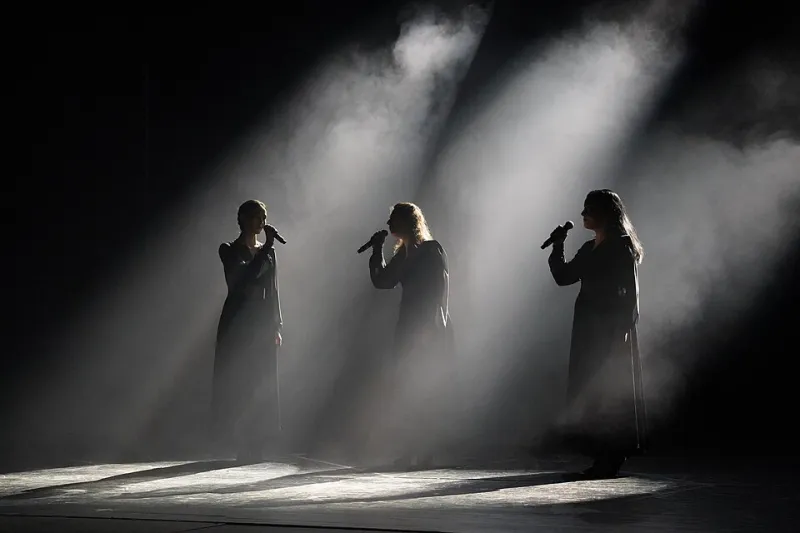
Photo: Svetlio17831, CC BY-SA 4.0, via Wikimedia Commons
The entertainment industry runs on an 18-month clock. Something blows up, everyone chases it, the market gets saturated, and the whole thing collapses before the next wave arrives. It's a cycle that's claimed more careers than bad reviews ever have. Which makes Aaron Kwok's trajectory genuinely fascinating — because he doesn't seem to be running on that clock at all.
Five-plus decades of cultural relevance. Multiple reinventions that never felt desperate. A fanbase that spans generations without the whole thing tipping into nostalgia territory. How does that actually happen? It's not luck, and it's definitely not just talent. There's a real framework underneath it, and once you start looking for it, it's hard to unsee.
Identity First, Trend Second
Here's the thing about performers who chase trends: they're always one step behind. By the time you've absorbed a sound, built a tour around it, and released the project, the cultural moment has already shifted. You're not riding the wave — you're wading through its wake.
Aaron Kwok figured out early that the only sustainable position is to have such a clear artistic identity that trends have to come to you. That's not arrogance — it's strategy. When your aesthetic is distinct enough, when your movement vocabulary is specific enough, when your stage presence is unmistakable enough, you don't need to pivot every time the industry does. You become a reference point instead of a follower.
American audiences have seen this work exactly once in a generation with someone like Prince or David Bowie — artists so stylistically defined that they absorbed influences without ever losing themselves in them. Kwok operates from that same philosophy, just applied to the specific demands of pan-Asian pop entertainment. The result is a performer who can drop into virtually any sonic landscape and still sound like himself.
The Difference Between Evolving and Chasing
There's a distinction worth drawing here, because it's easy to confuse the two. Evolving means your artistry deepens over time — new textures, new collaborators, new emotional range. Chasing means you're reacting to what's already popular, hoping to absorb some of its commercial energy before it dissipates.
Aaron Kwok has been evolving consistently. His dance work in the 1990s was kinetic and explosive — heavily influenced by the high-impact choreography that defined Hong Kong pop at the time. But instead of staying locked into that era's aesthetic, he kept studying movement, kept working with choreographers who pushed him somewhere new, kept treating his physical performance as a craft that could always go deeper.
The same pattern shows up in his music. He hasn't chased every production trend that's swept through Asian pop over the past three decades, but he hasn't ignored them either. The approach seems to be: absorb what genuinely fits, leave the rest alone. That kind of editorial discipline is rare. Most artists, especially ones with long careers, end up with discographies that read like a map of whatever was popular each year. Kwok's catalog feels more intentional than that.
Why Longevity Requires Saying No
One of the underappreciated aspects of a career like this is how many things you have to not do. Every trend cycle comes with opportunities attached — collaborations that would have been commercially smart but creatively off-brand, formats that would have generated short-term buzz but diluted long-term identity, partnerships that would have expanded reach but muddied the message.
For American performers watching this from the outside, that's probably the hardest lesson to absorb. The industry incentivizes yes. Say yes to the feature, say yes to the brand deal, say yes to the reality show, say yes to whatever format is generating engagement this quarter. And for a minute, it works. Then you look up and realize nobody's quite sure what you stand for anymore.
Aaron Kwok's selectivity has been well-documented among fans who've followed his career closely. He doesn't appear everywhere. He doesn't take every film role offered. He doesn't flood the market with product just because the pipeline exists. That restraint is a form of brand management, but it's also something more personal — it's the behavior of someone who actually cares what their name is attached to.
The Fan Relationship as a Longevity Engine
Here's something that gets overlooked in conversations about career sustainability: the quality of your relationship with your fanbase matters more than the size of it. A massive but passive audience can disappear overnight when the algorithm stops feeding them content. A smaller but deeply invested community will follow you through stylistic shifts, quiet periods, and creative experiments that don't land perfectly.
Aaron Kwok has cultivated the second kind of fanbase for decades. The people who show up for his concerts aren't there because he's trending — they're there because he's earned a specific kind of loyalty that transcends any individual project. That loyalty functions as a buffer against the volatility of trend cycles. Even when a particular era of his work doesn't resonate with mainstream audiences, the core community holds.
For US-based entertainers trying to build something durable, this is worth sitting with. The temptation is always to optimize for reach — more followers, more streams, more algorithmic visibility. But reach without depth is fragile. Kwok's career suggests that depth is the more valuable long-term asset.
What American Performers Are Starting to Notice
It's not a coincidence that conversations about Aaron Kwok keep surfacing in American entertainment circles lately. Managers, choreographers, and creative directors who've worked adjacent to his productions have come back with the same observation: the man operates with an unusual degree of intentionality about where he's going and what he's building toward.
In an industry that often rewards reactivity — jump on the trend, move fast, iterate constantly — that kind of long-horizon thinking stands out. American pop culture has its own examples of artists who've managed to stay relevant across decades without becoming self-parody, but they're rare enough that people study them. Kwok belongs in that conversation, and more people in the US entertainment space are starting to put him there.
The Real Answer to the Longevity Question
So how does Aaron Kwok stay relevant when trends move this fast? The honest answer is that he never fully surrendered his identity to any single trend in the first place. He's absorbed influences, evolved his craft, and made strategic choices about what to engage with and what to let pass — but through all of it, there's been a consistent core that audiences can orient around.
That consistency isn't rigidity. It's more like a gravitational center — something stable enough that everything else can orbit it without pulling the whole thing apart. And in an industry that churns through identities as fast as it churns through sounds, that kind of stability turns out to be the rarest competitive advantage of all.
Five decades in, Aaron Kwok isn't just still relevant. He's a case study in what relevance actually requires.